Player guide
Afterworld Laws and Society Overview
Review the announced political, ethical, allocation, crisis, and social decisions without presenting unavailable laws or effect values.
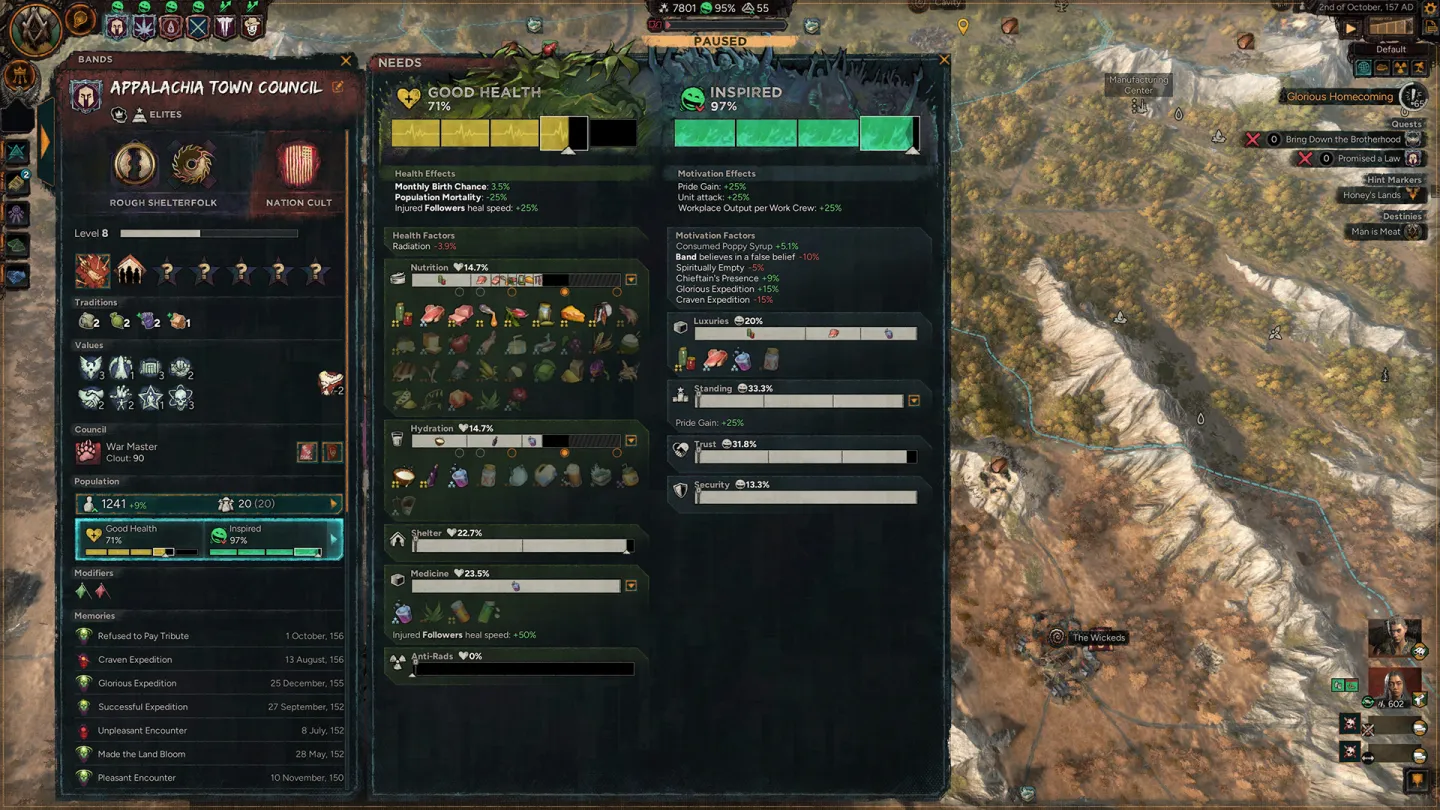
Afterworld asks the player to build a society as well as an empire. Official material frames people as the tribe’s most valuable resource and places political choices alongside survival, exploration, settlement management, and war.
From a band to a political community
The campaign starts with a small survivor group, but its responsibilities expand as that group becomes a tribe and then a larger nation. Developer Diary #1 says the player begins with a concise background and shapes society through decisions made during play.
That gradual development is important. An Origin establishes where the group begins, but it does not fully define its later institutions or values. New encounters, discoveries, shortages, and crises create questions that the player must answer over time.
The decisions Paradox has confirmed
The official Afterworld site says players draft laws for a new society. It names three broad questions:
- who receives scarce goods;
- who earns a voice in leadership; and
- what the nation stands for.
Paradox also says new discoveries and crises reshape people’s demands. A food shortage can become a famine, while a political mistake can fracture the nation. These statements establish that material conditions and political stability are connected, but they do not publish a formula or guarantee a specific outcome from every shortage.
Ethics, religion, and identity
The announcement describes difficult choices around laws and ethics. The official site adds decisions about rationing resources and how society treats mutated and augmented people. Developer Diary #2 places religion and competing political ideas at the center of the setting, describing both surviving forms of Christianity and new faiths shaped by the post-Fall world.
Those sources support religion as a serious part of social identity rather than decorative lore. They do not provide a complete religion list, conversion model, tolerance system, or set of bonuses. The Ideas Tree confirms one connection between encounter and belief through the organized-religion example, but its detailed rules remain unknown.
External relationships also shape society
Players can trade with other groups, absorb wandering tribes, form alliances, raid rivals, or fight for control. These choices affect who joins the nation and what threats it faces. The September 4 interview says different groups may want different kinds of society and may be willing to fight over those differences.
That is a confirmed design theme, not a published diplomacy matrix. The current material does not define opinion values, casus belli, assimilation rules, citizenship categories, or the political consequences of each diplomatic action.
Crisis is part of the design
Paradox repeatedly describes decisions with no easy answer. Scarcity, environmental danger, recovered technology, belief, and the demands of a growing population can pull the state in different directions. This makes social policy part of the game’s expanding strategic loop rather than a separate flavor layer.
No first-party source yet establishes named law trees, voting procedures, offices, classes, interest groups, amendment rules, cooldowns, or numerical modifiers. A detailed policy guide would therefore be speculative.
Evidence boundary
This page explains the confirmed questions that Afterworld intends players to govern. It does not reconstruct law categories from screenshots, infer ideology effects, or recommend an optimal society. Exact institutions and values remain unavailable until Paradox documents them or the game can be tested.
Last verified: September 6, 2026.
Sources & verification
How this page was checked
Last verified
- 01paradoxinteractive.comdeveloper
Official announcement supports the game premise, developer framing, and major announced systems.
View source - 02paradoxinteractive.comofficial
Official game site supports scarce-goods allocation, political voice, national identity, crises, religion, and social treatment choices.
View source - 03forum.paradoxplaza.comdeveloper
Official Developer Diary #2 supports the setting's religious revival, competing beliefs, and political ideas.
View source